
FULTON, Miss. – March 4, 2026 – Walking into the carpentry shop at the Itawamba Career & Technical Center feels less like entering a classroom and more like stepping into a manufacturing facility. Rows of machines, saws, and workbenches are clean and evenly spaced across the floor. At the back of the shop sits one of the most advanced tools in the room.
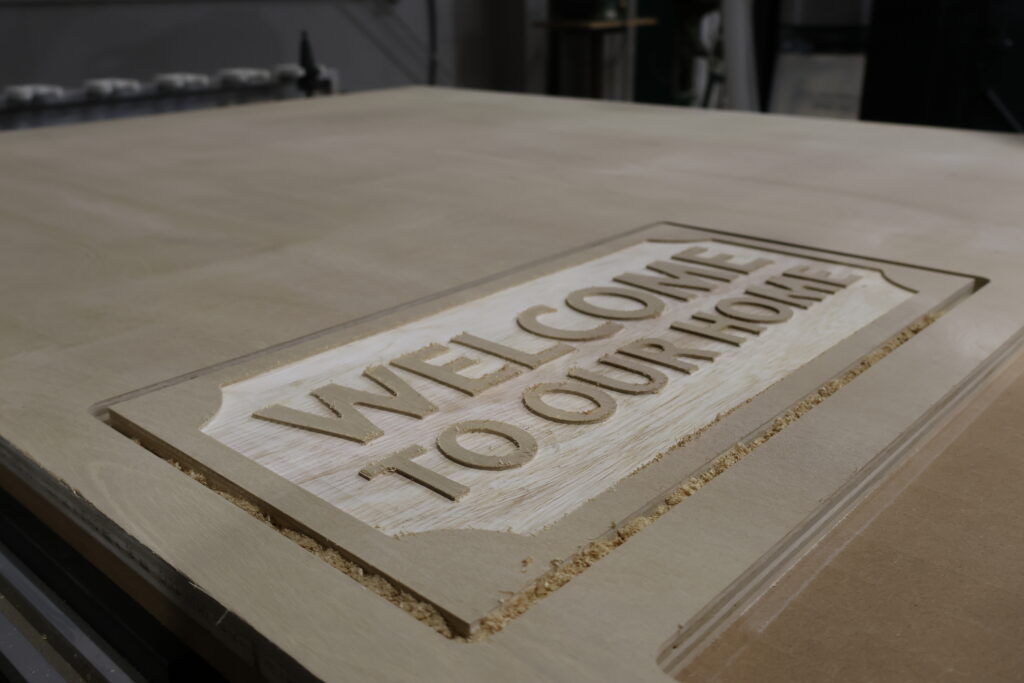
It’s a Computer Numerical Control, or CNC, machine — purchased through an EquipMS grant — and it represents both the future of construction and expanded opportunities for students in the program. Using CAD/CAM software to generate toolpaths, the CNC machine automates complex designs, including cabinetry, furniture and intricate carvings.
Exposure to industry-grade equipment like the CNC machine further strengthens that advantage. Senior Keith Getchell described working with the machine as “exhilarating.”
“It gives you an upper hand in life if you’re going into construction,” Getchell said. “You have to be more precise with it, and that’s what makes it fun.”
“The addition of the CNC machine moves our program into the future of construction,” said ICTC Director, Carrie Grubbs. “Our students are not just learning traditional carpentry skills, they’re gaining experience with technology that is transforming the industry. This gives them a competitive edge when they step onto a job site or into postsecondary training.”
Now in its second year, EquipMS provides funding to Mississippi public school districts to modernize, replace or enhance priority sector career and technical education programs, ensuring students train on equipment that reflects today’s workforce needs.
“We are incredibly grateful for the EquipMS grant and the investment in our students,” Grubbs said. “Opportunities like this ensure our programs stay aligned with workforce demands and allow our students to train on the same high-quality equipment used in today’s industries.”
“We are so thankful for that grant,” said Chris Holder, construction instructor at the center.
Carpentry prepares students for careers in the construction industry through hands-on training aligned with industry standards. The two-year program builds skills progressively, starting with foundational instruction in tools, safety, construction math, and building materials before advancing to site layout, residential framing, and blueprint analysis. Following NCCER guidelines, students earn nationally recognized credentials that position them for immediate workforce entry or continued training.
Holder, now in his fifth year teaching the program, brings firsthand industry experience to the classroom. Before becoming an instructor, he worked in construction and later taught math and science.
For Holder, however, the heart of the program is not the equipment or even the credentials — it’s the students.
“The students,” he said when asked what he enjoys most about his job. “I like watching them make a connection and understand what they need to do or have that ‘aha’ moment.”
That growth extends beyond technical skills. Teamwork and communication are embedded in daily instruction, mirroring expectations students will encounter in the workforce.
“When you get a job, you have to have the ability to work with others,” Holder said. “We do a really good job here practicing communication, practicing working with other people, being in a group, trying to accomplish a goal.”
“Mr. Holder does an outstanding job teaching far more than construction skills,” Grubbs added. “He is developing young people who understand responsibility, teamwork, communication and work ethic. Those skills are just as important as technical ability.”
Students say the hands-on environment sets the program apart.
“I love hands-on stuff,” said Cameron Campbell, an 11th grader in his second year. “I get to build things with my hands and do what people do in the real world.”
Campbell said the program has helped shape his career goals.
“You never really know what you’re going to think about it until you try it,” he said. “I think I might start framing, and eventually I want to have my own construction business.”
Senior Wes Wiygul said early exposure gives him an advantage.
“Getting into it earlier and knowing what you’re doing early will help you out in the future,” Wiygul said. “Just being hands-on and learning before I have to do it in the field — having that step up on everybody else.”
He added that the program has strengthened his ability to work with others and meet expectations.
“It’s helped that I work with teammates — work in a group, work on a schedule, get stuff done at a certain time and how it’s supposed to be done,” he said.
For 11th grader Sarah Dodd, the program supports her plans to pursue architecture.
“I want to go into architecture, so I feel like this program would actually help that,” Dodd said. “They would still have to train me — but not as much.”
Beyond technical skills, students say the program builds connections and confidence.
“You get to connect with new people. It’s like a new experience,” said senior Jamarkus Parks. “It gives you new opportunities.”
Holder intentionally models the shop after real-world job sites and reinforces expectations through industry visits and strict safety standards.
“When we visit a job site, you’re going to have to wear a hard hat, safety glasses, a high-visibility vest,” Holder said. “Whatever their rules are for that site, we follow them — even as visitors.”
As Mississippi continues to prioritize workforce development in high-demand sectors, construction remains a key driver of economic growth across the state. Investments through EquipMS are helping modernize career and technical education programs so students graduate workforce-ready — equipped with industry-recognized credentials, real-world experience, and familiarity with advanced technology like CNC machining. By aligning classroom training with employer needs, programs like Itawamba’s carpentry pathway are helping build the skilled talent pipeline that Mississippi’s economy depends on.


About AccelerateMS
AccelerateMS supports the people and businesses of Mississippi by creating and implementing workforce strategies that link individuals to transformative, high-paying careers. Through strong partnerships and effective grants management, the organization promotes sustained individual, community, and statewide economic growth.