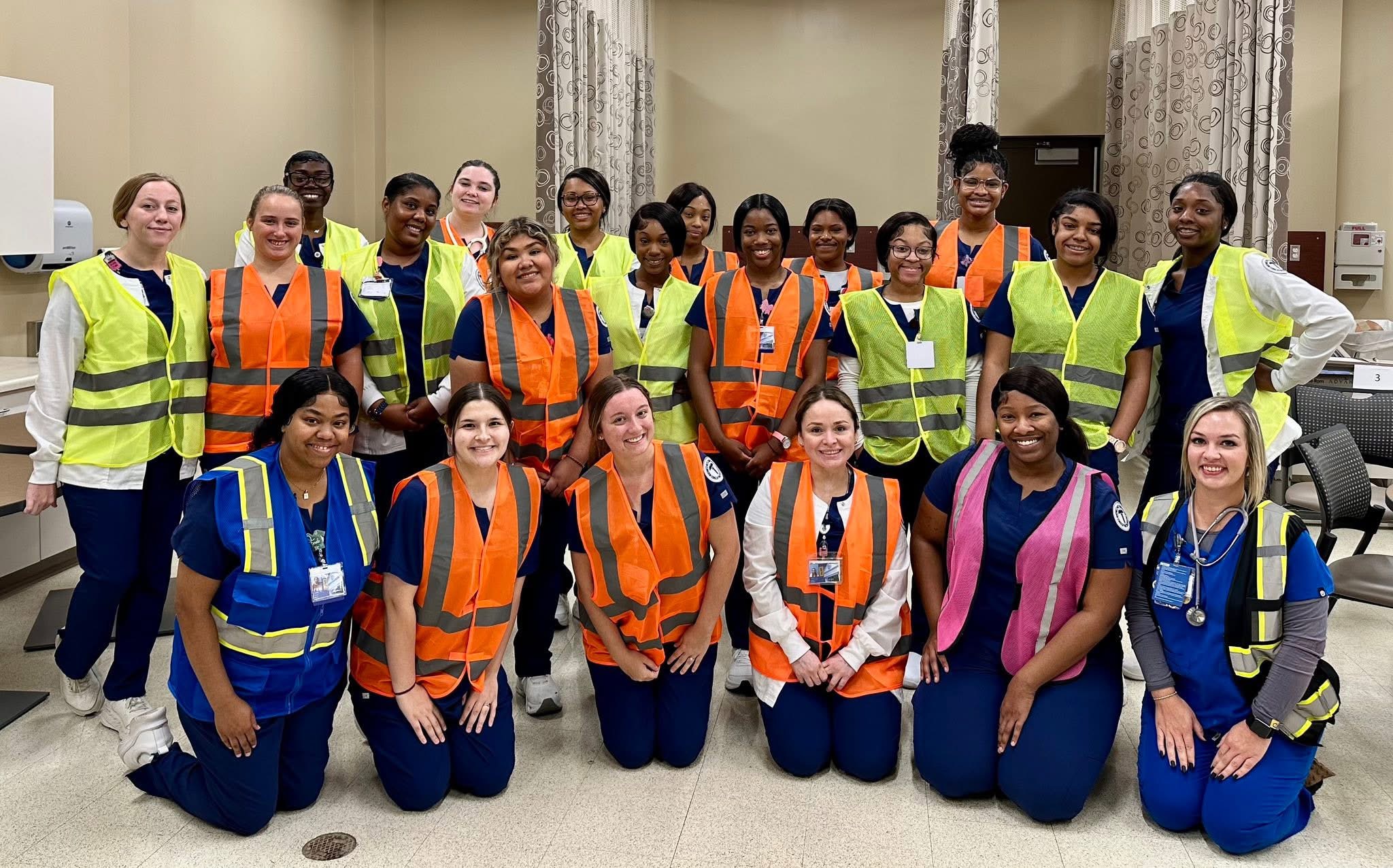
SENATOBIA, Miss – November 25, 2025 – When nursing student Zylexus Watson walked into nurse navigator Emily Tristeza’s office at Northwest Mississippi Community College, she often arrived carrying more than her textbooks. As a young mother of two, balancing coursework, childcare, and financial strain, she sometimes came in overwhelmed. But she always left encouraged.
“Seeing her made my day better,” Watson said. “Sometimes I’d stop by just to get a smile and some encouragement.”
Watson is one of many students helped by Mississippi’s Nurse Navigators initiative, a program funded through the American Rescue Plan Act and created to address the state’s critical healthcare workforce shortages. Authorized by Senate Bill 3113, the effort placed experienced registered nurses on community college campuses to support students facing academic and personal barriers that threaten completion.
In 2022, NWCC applied for and received funding for a single navigator position.
“We felt that this was something our program needed,” said Betty Ginn, director of the nursing program. With retention benchmarks of 60% or higher and heavy faculty workloads, leadership believed the grant could fill an essential gap. “We reviewed the job description and submitted the paperwork. We were approved for one position and hired Emily Tristeza.”
Tristeza had long considered transitioning from hospital work into education.
“I always enjoyed mentoring nursing students,” she said. “I know how they feel because I was once in their shoes. When I saw this job, I thought, ‘This seems awesome,’ because my whole role would be to support nursing students throughout their educational journey.”
Nursing school leaves little room for error, Ginn said. Students must score at least 80% on tests, and those who return after failing a course are considered high-risk. The rigor reflects the pressures of real clinical decision-making.
“It’s great to know normal blood pressure is 120/80,” Ginn said. “But what if it’s 50/30 or 220/180? What are you going to do? That’s what our tests measure—the application of knowledge.”
Tristeza monitors student performance, meets regularly with high-risk students and intervenes when she sees early signs of trouble. She also supports students dealing with financial hardship, anxiety, work schedules and childcare responsibilities.
“I never want students to be adrift and alone or forced to choose between studying and working to feed their families,” she said. “We want them to know we’re here for them.”
For Watson, the navigator program came at a critical moment. Despite strong grades in high school, she found nursing school required entirely new skills.
“I applied for the nursing program three times; I guess the third time was the charm,” she said. “I never had to study before. Going into nursing school, I had to completely change my learning style.”
Her first semester was especially difficult. “My baby wasn’t even a year old,” she said. “I didn’t think I’d make it.”
Her regular meetings with Tristeza helped her regain confidence and adopt new study habits. By her second semester, she was at the top of her class.
“She offered me study techniques and advice,” Watson said. “Sometimes I’d stop by just to get encouragement.”
Tristeza said watching Watson grow was rewarding. “It was amazing to watch her blossom with just a little encouragement and a few tips from people who really cared.”
Watson graduated in May 2025. “Being able to provide for my family and not struggle financially—the money is the best part,” she said. She became a nurse to help others: “I like bringing people back to their quality of life.”
NWCC officials say the grant has had a measurable effect. Over the past three years, nine cohorts have recorded a 100% NCLEX pass rate, reflecting strengthened academic support and preparation.
With more than 120 nursing students at the Oxford campus alone, Tristeza travels between multiple locations each week. Ginn said a second navigator would be beneficial. “We could really use another nurse navigator just for our Oxford campus,” she said.
NWCC continues to serve regional healthcare needs through accredited nursing programs at its Senatobia, DeSoto and Oxford campuses. With about 7,800 students enrolled across the college, leaders hope to secure future funding to sustain the navigator model they say has directly improved retention and completion.
For students like Watson, the difference is lasting. “If I can do it with two kids,” she said, “you can do it.”
About AccelerateMS
AccelerateMS serves the people and businesses of Mississippi by developing and implementing workforce strategies that connect individuals with transformative, high-paying careers. By leveraging resources and partnering with organizations that share complementary missions, AccelerateMS drives positive change and fosters long-term individual, community, and statewide economic prosperity.